
I’m Ali. I teach the parts between the demo and production.
I build complete products on camera — web, mobile, and the services behind them — and explain the architecture out loud: how the UI, data, authentication, billing, and AI workflows fit together, and where each one fails first. The goal is not more code to copy. It is better judgment you can reuse on any stack.
The lesson is the whole system, not the happy path.
Most tutorials stop exactly where the work starts. The form submits, the list renders, the recording ends — and everything that decides whether a product survives a real user is left out: the permission that has to be checked on the server as well as on the button, the webhook that arrives before the row it refers to, the retry that must not charge the card a second time.
So the builds run long, and they run to the end. I ship the product on camera, say out loud why each boundary sits where it does, and leave the wrong turns in — because the recovery is the part you cannot get from documentation, and a build that appears to go straight through teaches nobody what to do when theirs does not.
The work this is all based on.
Complete products, shipped end to end on camera, with the architecture explained as it is built. Start anywhere — each one stands on its own.
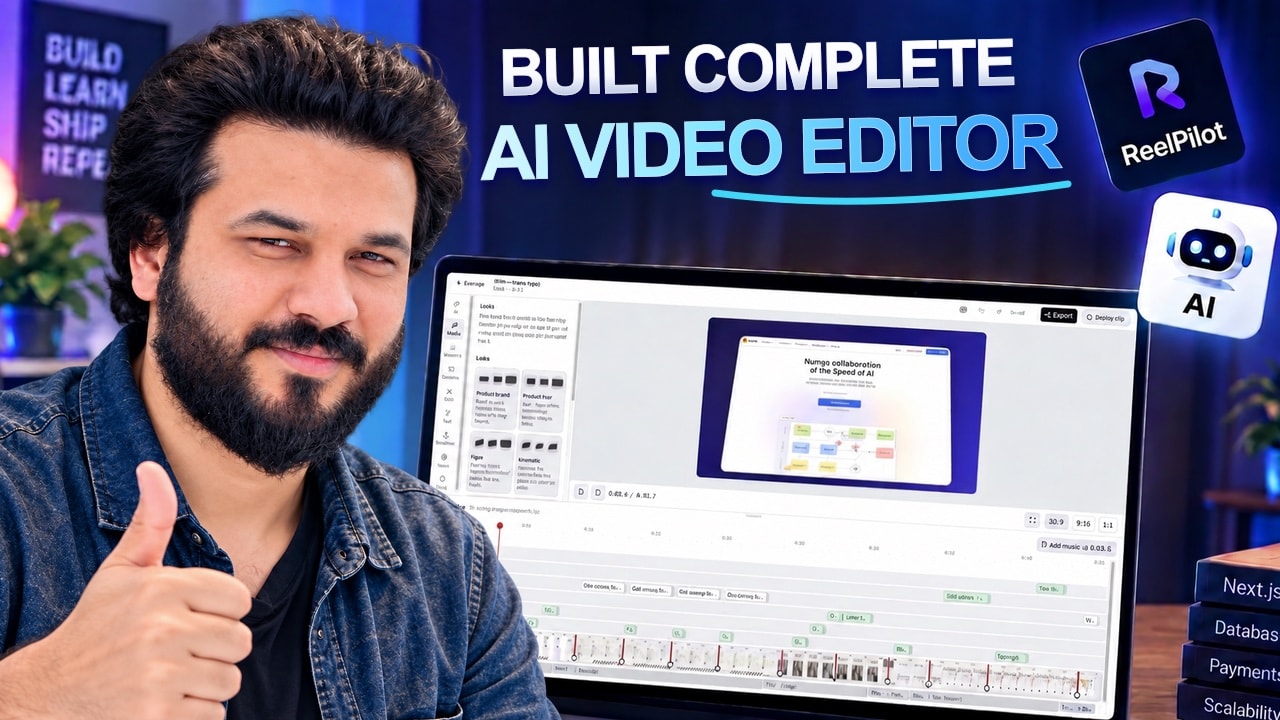
A browser video editor for product videos: record or upload your app, let an AI director plan the camera, cuts and text, refine it on a multi-track timeline, then export an MP4 or share a link.
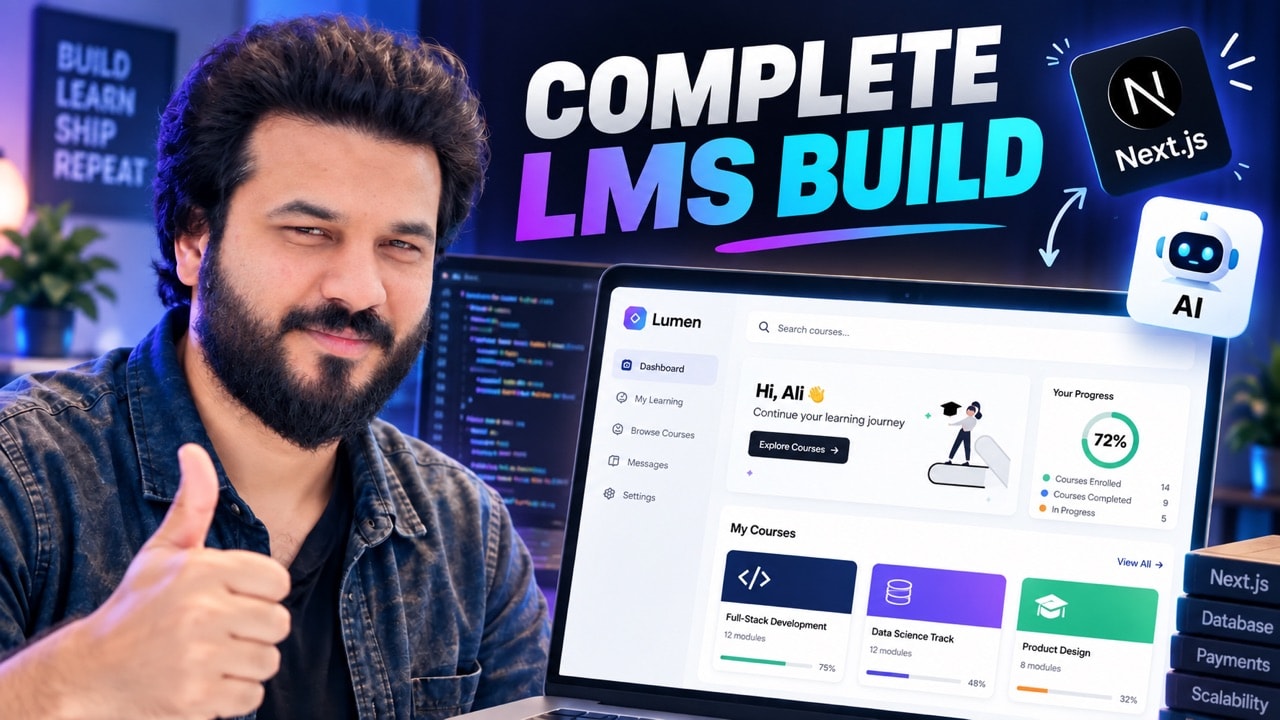
A course marketplace in the shape of Udemy: instructors author courses that go live through an admin review, learners buy through Stripe and earn certificates anyone can verify, and every sale records the instructor's share.
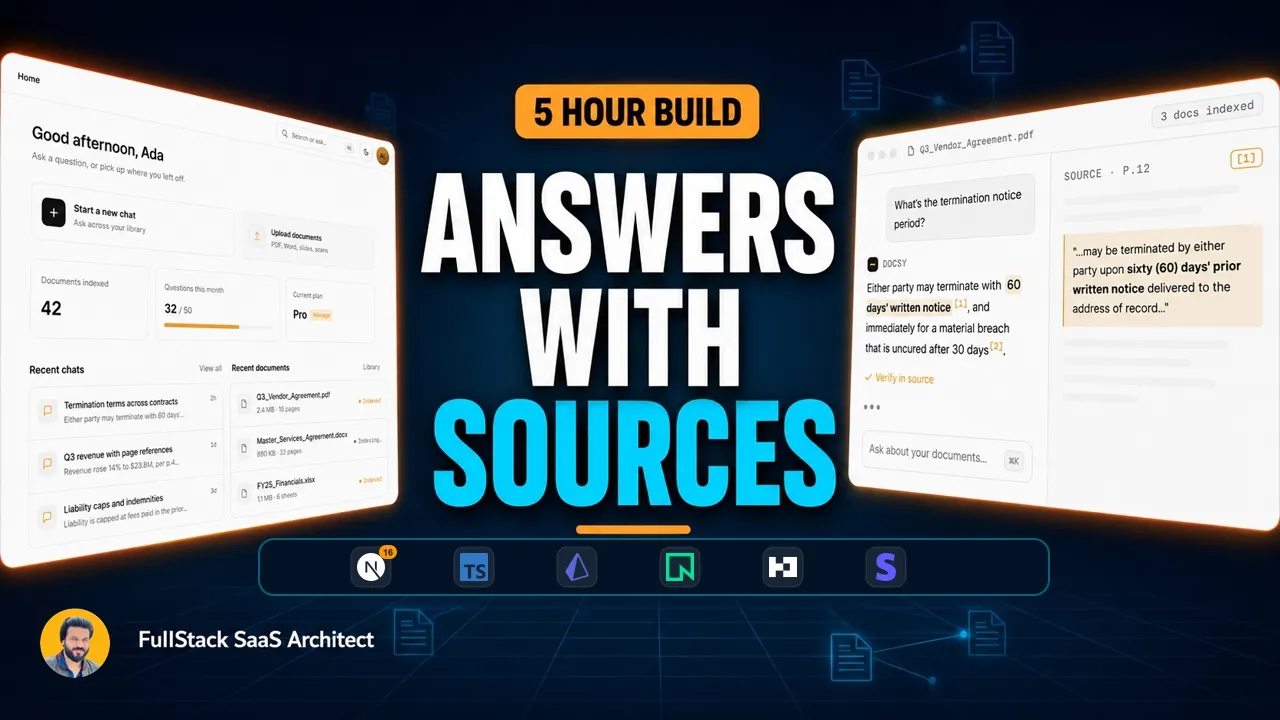
A document workspace where Claude answers only from the files in the chat, every claim opens the exact passage it quotes, and questions are metered by plan through Stripe.
Four things I keep coming back to.
Production details matter
The retry that must not charge twice, the permission checked on the server as well as on the button, the webhook that lands before the row it refers to. These are not edge cases bolted on at the end. They are the product.
AI is leverage, not judgment
An agent will write the easy eighty percent faster than you can read it. Deciding what to build, where the boundaries go, and whether what came back is actually correct is still the work, and it is still yours.
A complete system teaches more than isolated syntax
Knowing the framework is not the same as knowing the product. The lesson only lands when the interface, the schema, the auth boundary and the deploy are all in one picture at the same time.
Failures belong in the lesson
Retries, permissions, concurrency, timeouts, bad input — and the specific fix for each. A build edited down to the parts that worked is a highlight reel, and nobody ever shipped one.